
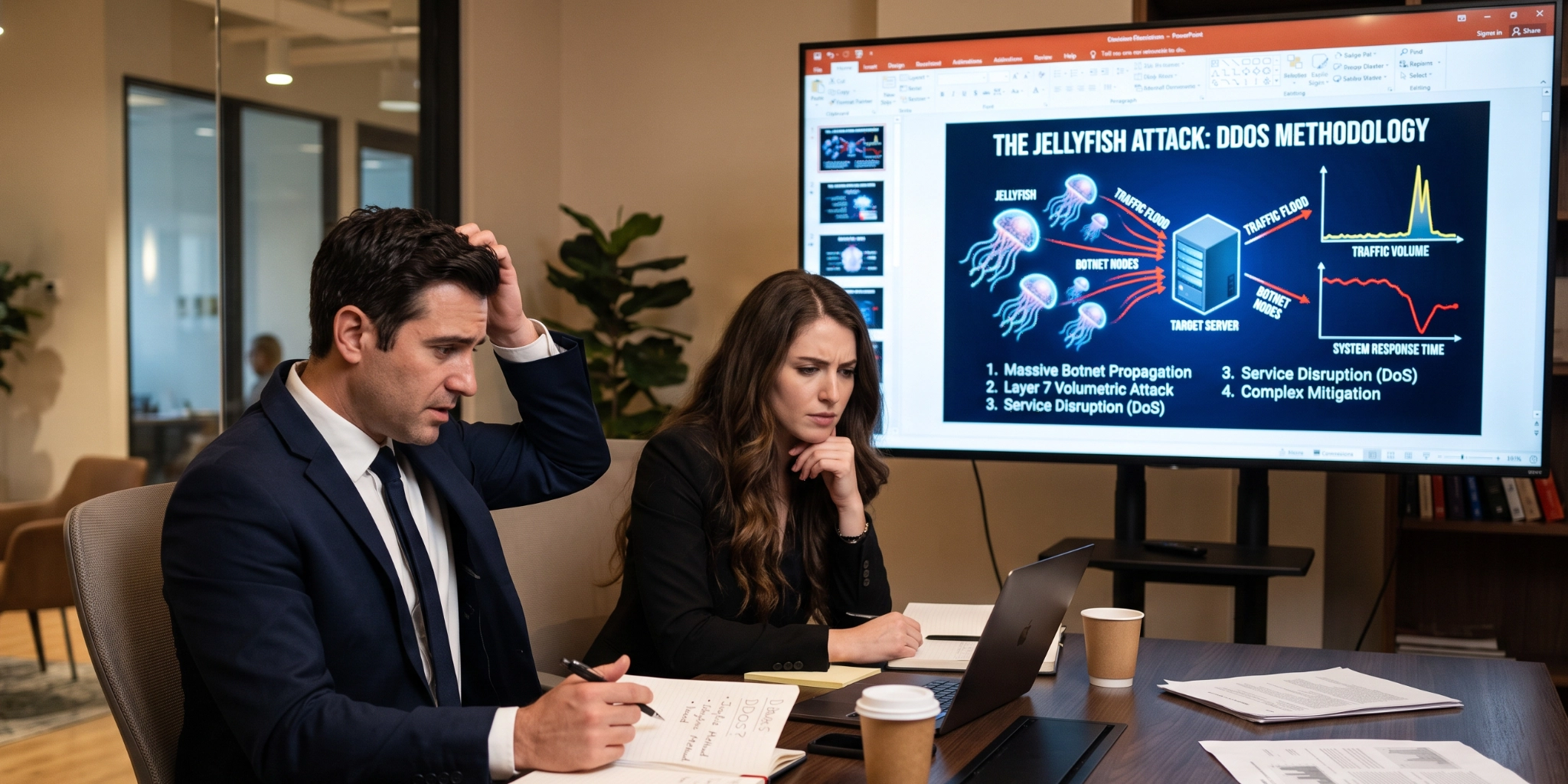
When leaders evaluate operational threats to their organisation, they typically consider familiar scenarios: ransomware outbreaks, hardware failures, power outages, or localised network disruptions. It is far less common to see a massive swarm of jellyfish listed on a corporate risk register.
Yet, that is precisely what forced the temporary shutdown of three nuclear power reactors at the Gravelines facility in France, alongside a power reduction at a fourth unit. Millions of tiny organisms clogged the essential water intake filters required to cool the reactors. Despite the operator spending hundreds of thousands of dollars on preventative measures following a similar incident the previous year, nature found a way to disrupt critical infrastructure once again.
In a similar vein, an unsuspecting raccoon in Connecticut managed to enter an electrical substation, resulting in power outages for more than two thousand five hundred customers.
These incidents highlight a fundamental truth for modern business leaders: Business Continuity Planning (BCP) is significantly harder than it appears, because the events most likely to cause severe downtime are often the ones you never anticipated.
The Flaw of the “Known Risk”
Most business continuity strategies focus heavily on known, predictable risks. Organisations create standard operating procedures for lost laptops, minor server outages, or routine Internet service provider downtime. While these plans are necessary, they frequently suffer from narrow assumptions.
True operational disruption rarely follows a neat script. A “jellyfish attack” in the business or cybersecurity world represents an unforeseen, non-technical, or external event that exposes a hidden single point of failure within your operations.
In cybersecurity and IT infrastructure, your jellyfish might be:
- A critical third-party vendor experiencing a sudden, unexpected insolvency or breach.
- Flooding of key location
- An obscure software dependency failing after an unannounced system update.
- A physical access issue preventing key personnel from authorising critical security controls during an emergency.
- An overwhelming volume of legitimate traffic or false-positive security alerts that paralyses your Security Operations Centre.
If your continuity plan only accounts for standard, routine incidents, a novel threat can quickly cause widespread disruption.
Business Continuity is a Living Strategy, Not a Document
The response by the power plant operator in France offers valuable lessons in modern resilience. To address the recurring threat, engineers did not rely on a single defensive barrier. Instead, they implemented a multi-layered approach combining technical monitoring, strategic partnerships, and manual recovery operations:
- Early Detection: Specialised cameras were installed at water intake canals to detect early signs of incoming blockages.
- External Partnerships: The operator partnered with local fishing and sea rescue organisations to monitor surrounding waters and deploy trawling vessels to reduce swarm density before it reached the plant.
- Operational Contingencies: Vacuum trucks were deployed on-site to assist with immediate cleanup and accelerate the restart process.
In cybersecurity and IT resilience, this approach is known as defense in depth. A business continuity plan should never be treated as a static document stored on a shelf to satisfy an compliance audit. It must be an active, evolving strategy that integrates technology, clear processes, and adaptable human intervention.
Practical Steps to Enhance Your Business Resilience
Building an adaptable framework capable of surviving unexpected disruptions requires deliberate effort. Consider the following strategies to strengthen your organisational posture:
1. Map Dependent Interconnections
Identify your critical business functions and trace every dependency required to keep them operational. Look beyond internal IT infrastructure to include third-party software, external suppliers, utility providers, and key personnel.
2. Test for Unconventional Scenarios
Standard table-top exercises often test predictable incidents. Challenge your teams with complex, multi-variable scenarios where primary communication channels are down, key vendors are uncontactable, or multiple systems fail simultaneously.
3. Establish Clear Escalation and External Support
During a major incident, rapid response is crucial. Ensure your organisation has pre-established relationships with external incident response specialists, legal advisors, and technical partners who can step in immediately when internal resources are overwhelmed.
4. Prioritise Iterative Improvements
Every incident, near-miss, or system anomaly should inform your resilience strategy. Routinely review and update your continuity procedures to reflect changes in your operational environment, technology stack, and threat landscape.
How Vertex Can Support Your Continuity Strategy
Preparing for the unexpected requires a comprehensive understanding of both your technical vulnerabilities and your overall operational risk profile. At Vertex Cyber Security, we assist organisations in identifying hidden risks, evaluating technical controls, and developing robust incident management strategies designed to maintain stability during critical events.
Whether you need a thorough Cyber Security Audit, assistance aligning with international standards such as ISO 27001, or ongoing Managed Services to keep your systems secure, our expert team is here to help.
To learn more about how we can strengthen your organisation’s resilience, visit our website at www.vertexcybersecurity.com.au or contact our team directly at .