
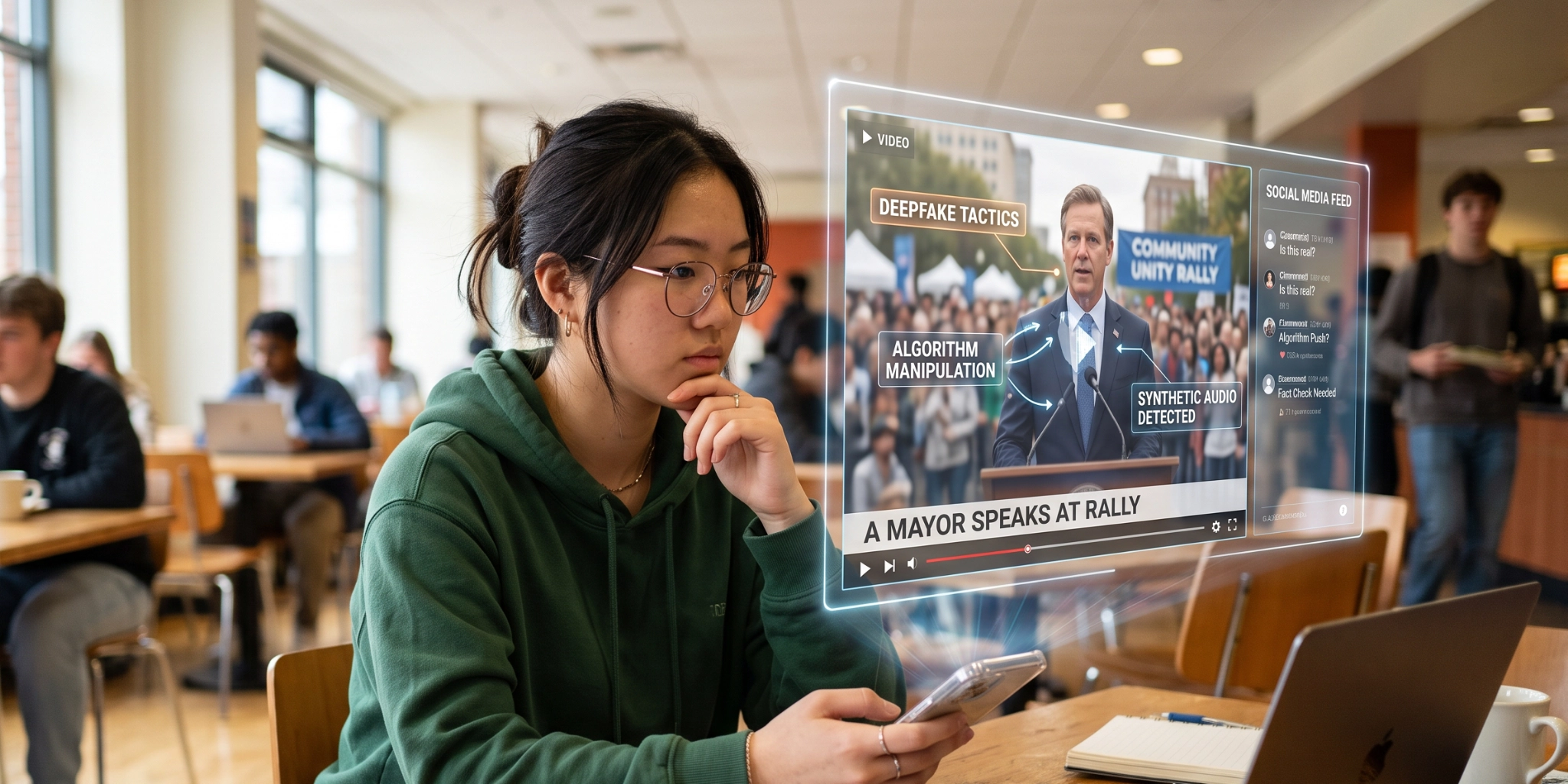
Recent investigations into global digital networks have uncovered a startling reality: foreign entities are deploying thousands of artificial intelligence deepfakes on social media platforms to manipulate public thought, trigger social division, and generate commercial profits. While many individuals view social media primarily as a tool for staying connected with colleagues and friends, its underlying infrastructure has increasingly been leveraged to deliver direct external influence.
What began as an engagement model designed around dopamine feedback loops and addictive algorithms has now escalated into a vehicle for foreign manipulation. Understanding how these networks operate, why they target public perception, and how they impact organisational productivity is critical for maintaining digital resilience.
The Rise of Industrial Scale Artificial Intelligence Propaganda
A recent landmark investigation by Reset Tech revealed a sophisticated foreign influence network operating nearly two thousand coordinated social media pages worldwide. This network generated massive quantities of artificial intelligence deepfakes targeting political figures across multiple nations, including Australia, the United Kingdom, the United States, France, Canada, and Mexico.
These fabrications, often referred to as artificial intelligence propaganda, manipulate digital media to depict public leaders expressing inflammatory or false statements. The primary mechanisms behind these campaigns often include:
- Emotional Escalation: Utilising artificial intelligence to produce highly charged, deceptive video clips that trigger immediate emotional responses such as outrage or anger.
- Commercial Exploitation: Capitalising on platform monetisation schemes, where high engagement levels allow page owners to earn thousands of dollars directly from advertising revenue.
- Audience Entrapment: Luring unsuspecting users with harmless, artificial intelligence generated imagery of animals or scenery before gradually shifting toward political manipulation.
This demonstrates that foreign influence is no longer restricted to traditional espionage. It has evolved into a commercialised, industrial scale activity designed to manipulate everyday digital interactions.
Direct Thought Input and the Impact on Organisational Productivity
The primary currency of modern social media platforms is human attention. By design, algorithms prioritise content that generates high emotional engagement, which frequently results in heated arguments and social fragmentation. When foreign actors exploit this mechanism, social media transforms into a tool for direct thought input.
By presenting subtly altered or entirely fabricated videos repeatedly, these campaigns gradually alter perceptions, deepen societal fault lines, and foster hostility. Beyond the broader social implications, this constant exposure to outrage and misinformation presents significant risks to business operations and economic productivity:
- Workplace Distraction: Continuous exposure to polarising online content consumes individual focus, reducing daily operational output and creative problem solving.
- Internal Discord: Misinformation and ideological arguments can seep into workplace culture, creating unnecessary tension among staff members and undermining team cohesion.
- Degradation of Critical Thinking: Long term exposure to rapid, emotionally charged content reduces an individual’s capacity to critically evaluate information, making employees more vulnerable to social engineering attacks and email compromise attempts.
Strategies to Enhance Digital Defence and Awareness
Addressing the challenge of artificial intelligence manipulation requires a combination of technical safeguards and heightened human awareness. While no single control offers absolute protection, organisations can consider several practical strategies to strengthen their security posture and mitigate the risks associated with digital manipulation.
1. Implement Tailored Cyber Security Awareness Training
Regular employee education programmes can help staff identify the subtle markers of synthetic media and deepfakes. Educating teams on how algorithms exploit emotion to drive engagement can empower individuals to pause and verify information before reacting or sharing.
2. Establish Information Verification Protocols
Encourage a workplace culture where critical information, particularly content that evokes strong emotional responses or relates to operational matters, is cross checked against reputable, primary sources.
3. Review Organisational Social Media Policies
Consider updating corporate policies regarding social media usage and digital hygiene. Clear guidelines regarding official communications and personal account security can help mitigate exposure to targeted social engineering.
4. Monitor Brand and Leadership Exposure
Organisations may benefit from actively monitoring public platforms for unauthorised impersonation or synthetic content targeting executive leadership, ensuring potential misinformation can be addressed swiftly.
The evolution of social media from a connection tool to an engine for foreign influence underscores the importance of proactive security measures. As artificial intelligence technologies become more accessible, the distinction between authentic interaction and calculated manipulation will continue to blur.
At Vertex Cyber Security, we are dedicated to helping organisations build resilient defences against emerging digital threats. Whether you require comprehensive employee cyber security awareness training, technical security audits, or expert guidance on strengthening your security posture, our team is here to assist.
To explore how we can support your organisation or to discuss your security requirements, please contact the team at Vertex Cyber Security or visit the Vertex website today.