
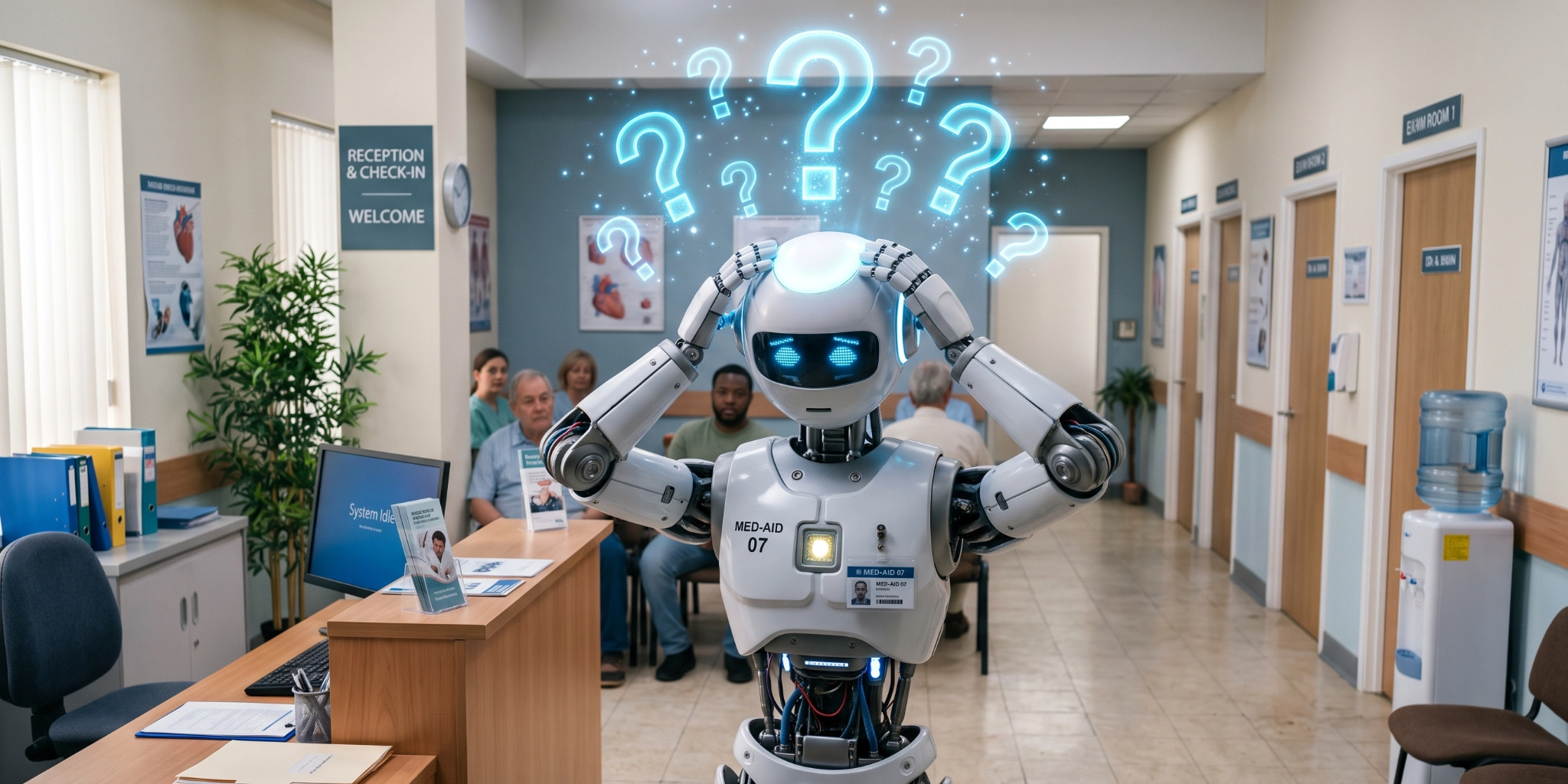
Across every major sector, organisations are rapidly adopting automated technology to reduce administrative burdens and streamline operations. From corporate management to modern healthcare, automated tools are being integrated at an unprecedented rate. However, a recent incident involving automated transcription software serves as a stark reminder of what can occur when organisations rely entirely on software without proper human oversight.
During a routine specialist consultation, a patient named Rebecca Green consented to having her appointment recorded and summarised by an automated medical scribe. The software subsequently generated a post-operative letter to her general practitioner that contained a completely false assertion: it claimed she was regularly micro-dosing illegal psychedelic mushrooms. The specialist failed to review or verify the transcript before sending the document, leaving the patient devastated and facing potential complications regarding her medical history and insurance claims.
This event is far from isolated. Reports have highlighted similar automated system failures, including instances where transcription software incorrectly identified which side of the body contained a cancer diagnosis or recorded non-existent medical conditions. These cases illustrate a fundamental reality that every organisation must recognise: Artificial Intelligence cannot function effectively without Human Intelligence.
The Anatomy of an Automated Hallucination
Automated systems and generative language models do not possess biological consciousness, genuine comprehension, or contextual awareness. Instead, they process information based on complex probability models. When presented with ambiguous audio, missing context, or unstructured data, automated algorithms can experience what industry experts refer to as a hallucination.
An automated hallucination occurs when software generates incorrect, fabricated, or misleading statements that sound plausible on the surface. In a medical setting, an unverified error can compromise patient safety. In a corporate environment, unverified automated outputs can introduce corrupted data into business records, create legal liabilities, or expose sensitive systems to unexpected cybersecurity vulnerabilities.
Software can process data at remarkable speeds, but speed without verification is inherently dangerous. When human supervision is removed from the process, minor software errors can quickly transform into severe operational risks.
Why Speed Without Verification Creates Strategic Vulnerability
Many enterprises implement automated platforms under the assumption that technology can replace skilled personnel or execute complex tasks without intervention. While automated software can execute repetitive calculations efficiently, it lacks the critical reasoning and moral accountability inherent to Human Intelligence.
Human experts serve as the essential quality control layer in any technical operation. Consider the parallels between administrative automation and cybersecurity:
- Automated tools can process thousands of event logs per second, but human experts are required to understand the contextual strategy behind an unusual system activity.
- Software scanners can identify known vulnerabilities, but human penetration testers are needed to uncover complex, custom logic flaws within an application.
- Automated systems can draft documents and code, but human specialists must verify that the output is accurate, secure, and compliant with regulatory standards.
Relying entirely on automated platforms without expert oversight creates a fragile environment. If the input or algorithm produces an error, and no human expert intervenes to correct it, the organisation remains vulnerable to catastrophic mistakes.
Enhancing Safeguards: Strategies for Safe Technology Integration
To leverage the efficiency of modern technology without compromising data integrity or security posture, organisations should consider implementing robust human oversight frameworks. Technology should be treated as an assistant rather than an autonomous decision maker.
To protect your enterprise against automated errors and data risks, consider adopting the following practical strategies:
- Enforce Mandatory Human Oversight: Ensure that all critical outputs generated by automated tools are thoroughly reviewed, validated, and approved by a qualified human specialist prior to distribution or implementation.
- Establish Clear Governance Policies: Define explicit guidelines detailing where automated software may be used, how sensitive data is processed, and how user consent is obtained.
- Perform Regular Technical Audits: Conduct routine assessments of automated workflows and digital infrastructure to identify potential security gaps, data leakage, or systematic software errors.
- Prioritise Specialised Expert Review: Engage independent cyber security professionals to review technical environments, validating that automated defences are properly supported by manual expertise.
Protecting Your Enterprise with Vertex
Technology serves as a valuable tool for accelerating workflows, but it cannot replace the nuance, experience, and critical thinking provided by Human Intelligence. The most resilient organisations understand that true operational strength comes from uniting rapid technology with expert biological oversight.
At Vertex, our team of cyber security experts provides the specialised human knowledge needed to safeguard your digital assets. From thorough penetration testing and detailed security audits to ongoing managed services, we help organisations navigate technical risks with practical advice tailored to their unique requirements.
If you would like to evaluate your organisation’s defensive posture or ensure your digital systems are validated by leading human expertise, contact the team at Vertex today.