
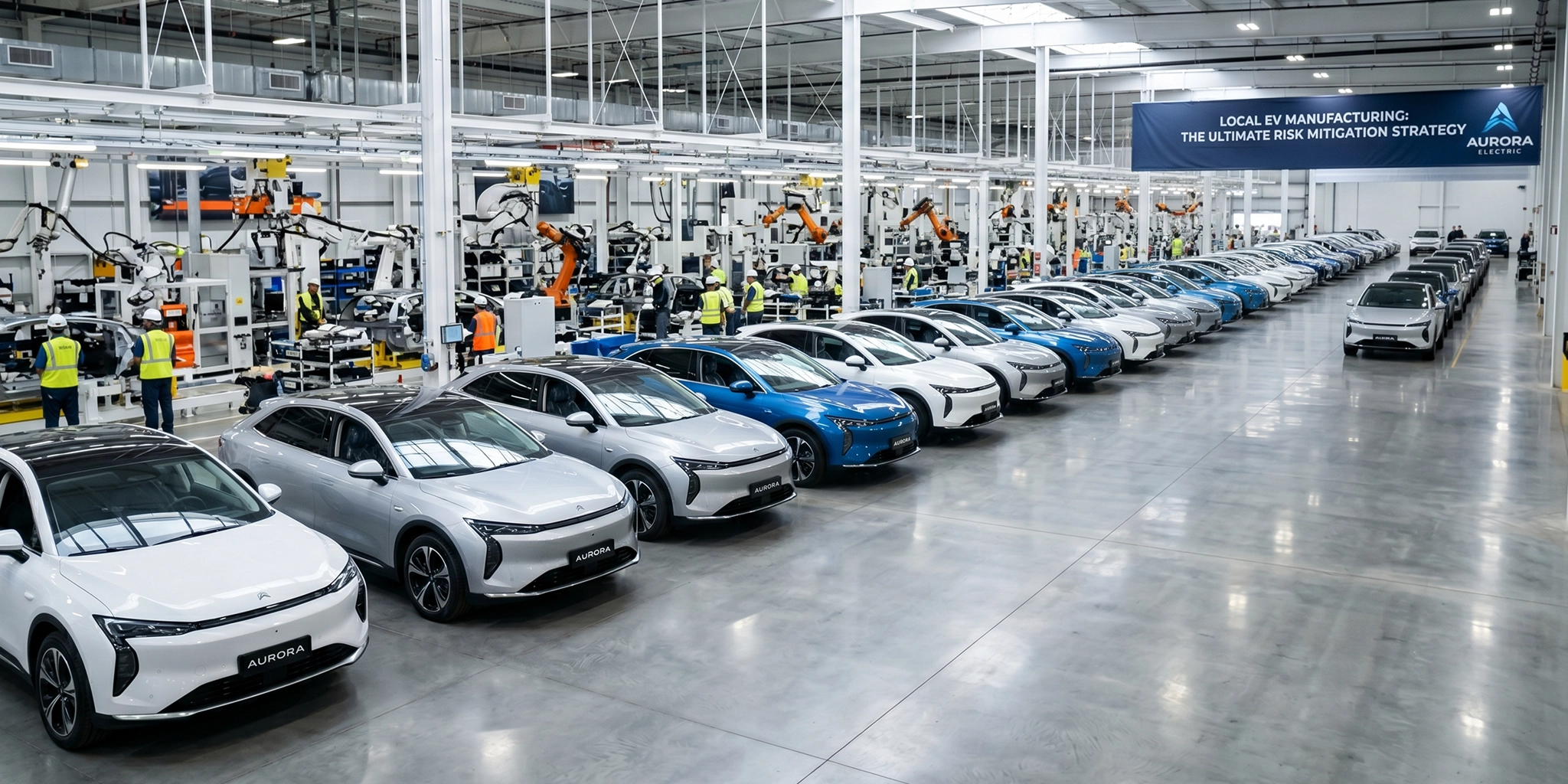
The disruptions of the past few years have delivered a stark reminder to businesses and governments alike: relying entirely on external networks leaves you deeply vulnerable. From the supply chain chaos of the pandemic era to the energy market shocks triggered by recent geopolitical conflicts, the message is clear. Waiting for a disaster to occur before building domestic capability is a strategy destined for failure.
In the world of cybersecurity, we regularly advise organisations that building a robust defence requires proactive planning rather than reactive panic. The exact same principle applies to national infrastructure, energy security, and corporate supply chains. Reviving local manufacturing, particularly in the electric vehicle and battery sectors, is not merely an industrial policy. It is a vital exercise in risk management.
The Multiplier Effect and Economic Resilience
When an economy relies entirely on importing finished goods, wealth continuously flows outward. Conversely, investing in local manufacturing creates a powerful economic stabilisation effect. Economists often refer to this as the economy reuse multiplication factor.
Within a domestic manufacturing ecosystem, every dollar spent locally can multiply to a value of approximately five dollars as it circulates through component suppliers, logistics partners, service providers, and consumer spending. By retaining this financial value domestically, a nation builds an economic buffer that protects local industries during global downturns.
From a strategic perspective, utilising local resources and materials simply makes sense. It creates high-skilled jobs, fosters domestic expertise, and ensures that the financial benefits of industrial production remain within the community.
Scaling Up to Achieve Market Viability
A common argument against reviving local automotive manufacturing is the question of scale. However, looking at modern consumer trends reveals a highly viable pathway forward. For instance, the Australian market alone purchases over one million sport utility vehicles (SUVs) and utility vehicles (utes) every single year.
To put this into perspective, many state of the art electric vehicle manufacturing plants operate highly efficiently with an annual output of approximately 250,000 vehicles. This means a single local factory, capturing just twenty-five per cent of the domestic market share, could achieve complete commercial viability. Historically, domestic manufacturers like Holden successfully captured up to fifty per cent of the local market at their peak.
The transition to electric transport is already accelerating rapidly:
- Popular electric models, such as the Tesla Model Y, have seen local sales grow from 25,000 vehicles to projections exceeding 50,000 within a single year.
- By providing targeted local incentives and capital support, an established manufacturer could realistically scale local production to over 200,000 vehicles within a few years.
- When combined with corporate and government fleet purchases, which account for more than 35,000 new vehicles annually, the demand required to justify a domestic plant is well within reach.
Overcoming the Wage Barrier Through Automation
Historically, high domestic labor costs were viewed as an insurmountable barrier to localised manufacturing. However, the technological landscape has fundamentally shifted. Advanced vehicle manufacturing, particularly for electric platforms, now relies heavily on sophisticated robotics and automated assembly systems.
Because robots can be deployed with equal cost efficiency anywhere in the world, the impact of localised wages on the final cost of a vehicle is significantly reduced. The key to competitive pricing no longer rests on cheap labor, but on optimising the supply chain, minimising international shipping costs for heavy raw materials, and eliminating the logistics risks of moving finished vehicles across oceans.
Battery Production as Critical Infrastructure
An electric vehicle strategy is inherently linked to energy storage. Establishing a domestic battery production facility provides a dual benefit. Beyond powering transport networks, the same technology can be utilised to produce home and commercial battery systems.
Recent international conflicts have highlighted how quickly traditional fuel sources can be disrupted or manipulated. Transitioning transport and energy networks to electrified systems backed by domestic battery production dramatically reduces a nation’s dependence on foreign oil imports. This shift directly improves gross domestic product and enhances long term sovereign security.
To accelerate this capability, partnering with established global leaders is a proven approach. Just as major international markets initially welcomed foreign technology pioneers to establish local operations, countries can invite tier one manufacturers to build domestic plants. The priority does not need to be outright ownership of the company; rather, it is about securing the physical manufacturing capability, utilising local resources, and upskilling the local workforce.
Shifting From Reactive Pain to Proactive Protection
The alternative to proactive investment is a familiar, risky cycle. Choosing to rely solely on foreign nations for critical transport and energy needs means selling off raw materials at a lower margin, only to buy back high value finished goods later. This leaves the local economy completely exposed to foreign market manipulation and sudden shipping blockades. When the next energy or transport crisis occurs, the resulting economic paralysis can cause severe political and financial instability.
There is an old saying that the lucky country is only lucky because we take proactive steps to avoid reactive pain. The next logical step in ensuring collective resilience is the localisation of electric vehicle and battery manufacturing.
From a financial kickstart perspective, establishing a local plant does not require bottomless funding. Instead, it requires structured incentives such as targeted tax discounts, low interest capital loans, and government sales guarantees. By providing an established manufacturer with the confidence to invest without facing existential risk, nations can secure their supply chains, lower consumer prices, and protect their future.
Building Resilience With Vertex
Whether you are analysing a multi million dollar industrial supply chain or securing a corporate digital network, the fundamentals of risk mitigation remain identical. True resilience requires identifying single points of failure before they are exploited by a crisis.
At Vertex Cyber Security, we help organisations implement proactive strategies to protect their operations, secure their data systems, and build robust defences against modern threats. To find out how we can help enhance your company’s operational security posture, consider reaching out to the expert team at Vertex today or visit our website for further insights.