
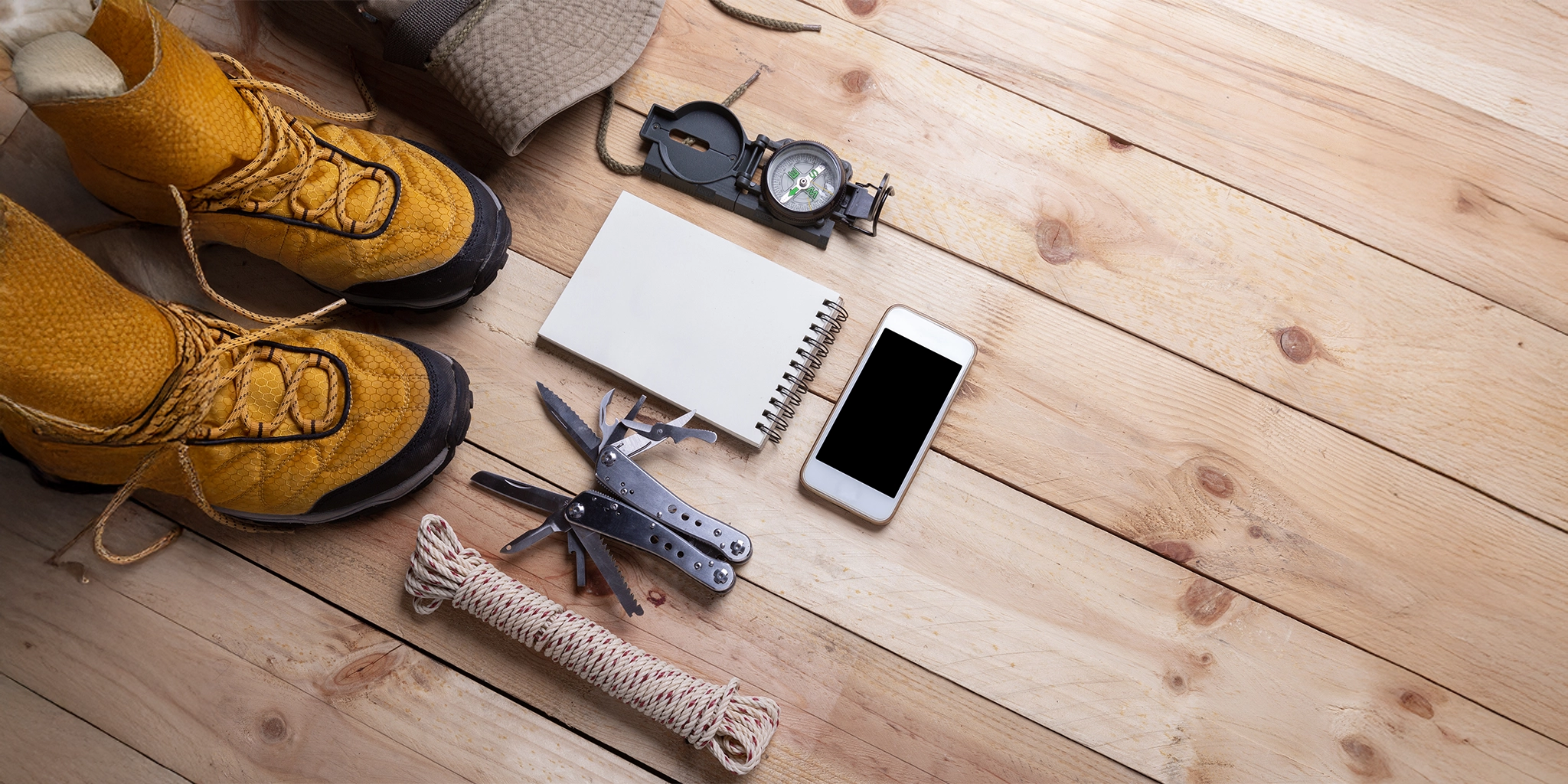
Life has a habit of throwing curveballs when we least expect them. In the world of cybersecurity, we spend a great deal of time analysing risks, identifying threats, and implementing controls to mitigate them. This mindset of preparedness does not need to stop at the digital border; it is equally applicable to our physical lives.
Whether you are commuting to the office, travelling for business, or simply navigating daily life, having a well-thought-out “risk management kit” in your backpack can make difficult situations significantly more manageable.
Here is a guide to what you might consider packing to ensure you are prepared for the unexpected.
Communication and Power: Your Lifeline
In almost any modern emergency, communication is your most valuable asset. The ability to call for help or coordinate with others is paramount.
- Mobile Phone with Satellite Connectivity: While we rely heavily on cellular towers, they do not cover every square inch of the planet, and they can fail during disasters. Modern technology is bridging this gap. Some carriers, such as Telstra in Australia and T-Mobile in the USA, as well as specific device manufacturers, are introducing satellite connectivity for messaging when standard reception is unavailable. It is worth checking if your device supports this and testing it beforehand.
- Solar Panel and Cables: If you are stranded or facing a prolonged power outage, a battery bank will eventually run dry. A portable solar panel, paired with the correct USB cable for your phone, provides a renewable power source to keep your communication lines open.
- Chargers: A compact charger for both your phone and laptop is essential for those moments when you can access a power outlet but your battery is critically low.
- Offline Map Applications: Connectivity is not guaranteed. Consider installing an application like OpenStreetMaps (OSM) on your phone. These allow you to download maps for offline use, ensuring you can navigate even without a data signal. Simply having your phone powered on can also assist rescue teams in locating you in extreme scenarios.
Physical Mobility and Health
Your physical state dictates how well you can respond to a crisis. Comfort and health are not luxuries in an emergency; they are necessities.
- Joggers: While formal shoes may look professional, they are rarely practical in an emergency. If you need to walk long distances or move quickly, appropriate footwear is crucial. Wearing joggers can reduce impact on your joints and back, preserving your energy for when you need it most.
- Weather Protection: A hat or cap can provide vital protection against the sun, while a jumper offers warmth in cold conditions and can double as a cushion if you need to rest on hard ground.
- N95 Face Masks: These are versatile tools. Beyond their obvious use for illness, they can help filter poor quality air in smoky environments or provide a small degree of warmth for your face.
- First Aid Essentials: A small supply of bandaids and personal medication—such as painkillers, allergy relief, or reflux medication—can prevent minor ailments from becoming major distractions.
- Sunglasses: Glare from the sun, water, or snow can severely impede your vision. Good eye protection helps you assess your surroundings accurately.
- Personal Hygiene: A travel toothbrush and toothpaste might seem trivial, but maintaining dental hygiene can provide a sense of normalcy and comfort during extended disruptions.
Practical Tools and Information
Sometimes, low-tech solutions provide the highest reliability.
- Paper and Pen: Batteries die, but paper does not. This allows you to leave notes for others, record important information, or map out a plan.
- Business Cards: These are excellent for networking, but in an emergency, they can also be used to leave a trail or identify yourself to others quickly.
- Cash: Electronic payment systems can go offline. Keeping a reserve of cash ensures you can purchase supplies or transport when digital transactions fail.
- A Whistle: If you need to attract attention, a whistle carries sound much further and with less effort than shouting.
- Ear Plugs: Chaos is often loud. Ear plugs can help protect your hearing or allow you to sleep in noisy environments, ensuring you remain rested.
- Small Waterproof Bag: This can protect your sensitive electronics or documents from water damage.
Work and Data Security
For the working professional, business continuity is also a form of survival.
- Laptop and Mouse: Essential for maintaining your workflow.
- USB Storage and Cables: A USB drive allows for the transfer of files if networks are down. From a security perspective, consider using an encrypted drive to protect your data if the device is lost.
- USB Power/Transfer Cable: A versatile cable that handles both power and data transfer is a lightweight addition that solves multiple problems.
Situational Additions
There are many other items one might consider, though their inclusion often depends on your specific environment and mode of travel. Items such as multi-tools, pocket knives, or large liquid containers can be incredibly useful but may cause significant issues at airport security.
Similarly, heavier items like large power banks, mirror, hand sanitiser, sunscreen, water, water bottle, food, emergency blankets, rope, or flares might be necessary for specific climates or remote travel but may add unnecessary weight for an urban commute.
There are examples where such a backpack could of saved lives such as the person who was stuck because their car 4wd got stuck: https://www.abc.net.au/news/2026-01-23/police-find-body-of-man-vehicle-urandangi-road-qld/106260468
Risk management is about preparation, not paranoia. By carrying these essentials, you are not predicting a disaster; you are simply ensuring that if the unexpected occurs, you have the tools to handle it effectively.
Much like physical preparedness, your organisation’s cybersecurity posture requires foresight and the right set of tools. If you are looking to assess your digital risks and ensure your business is prepared for the unexpected, contact the team at Vertex Cyber Security. We can help you build a resilience strategy that keeps you secure, no matter what curveballs come your direction.